

Cheat Sheet: Rusalka
Before you take your seat in the Glasshouse Theatre, here's the full rundown on everything you need to know about Dvořák’s Rusalka.
Written and provided by Clive Paget.


About the Opera
Inspired by Hans Christian Andersen’s The Little Mermaid, this fairytale opera tells the story of the luminous water nymph Rusalka. Seduced by a Prince, Rusalka abandons her family and everything she knows in the hope of finding true freedom. But all that glitters is not gold.
Dvořák’s score shimmers with sweeping romance and the many colours of glorious folk music, anchored by the spellbinding and much loved aria ‘Song to the Moon’.
In a nutshell
The composer: Dvořák. Czech. 19th century.
The music: Sumptuous, Wagner-influenced orchestrations combined with lively Czech folk music.
The big hit: ‘Song to the Moon’, sung by Rusalka as she dreams of life above the surface with her love.
The setting: A fairy tale lake and forest, a witch’s cottage and a palace.
The history: A hit in 1901, Rusalka took time to travel abroad. It’s now a part of the standard repertoire and Dvořák’s best-known opera.
A quirky fact to impress your date: An obsessive trainspotter, Dvořák once said, “I would give up all my symphonies for having invented the locomotive”. He was also a pigeon fancier. After one visit to London, Queen Victoria sent him two braces of English Pouters and four braces of wig pigeons.
Who was the composer?
A portrait of Antonín Dvořák.
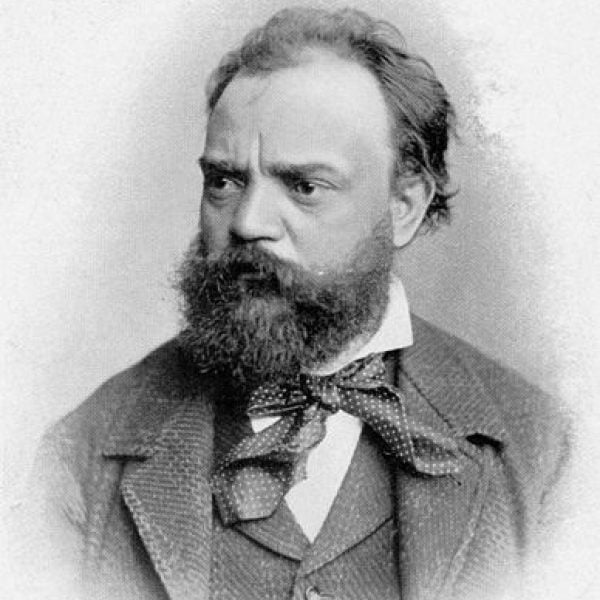
Antonín Dvořák is the most famous of all Czech composers, as successful in his own time as he is popular today. His tuneful compositions filter the late-19th Century Austro-German tradition through a nationalist lens, filling his music with the colours and spirit of his homeland.
Born near Prague in 1841, Dvořák studied violin, playing for some years in the orchestra of the National Theatre. His composing career took off when Brahms took an interest in him, leading to the commissioning of the first set of Slavonic Dances.
The success of his later symphonies, tone poems, chamber music and, in England, especially his choral music, saw his works performed from Russia to the United States. Of his ten operas, all of which are rooted in the Czech national spirit, only Rusalka is heard outside his native land.
In 1892, Dvořák moved to New York as director of the National Conservatory of Music of America. There he wrote his ninth and final symphony, From the New World and his Cello Concerto. Returning to Europe, he died nine years later and was buried with honours in Prague’s prestigious Vyšehrad Cemetery.
What happens in the story?
Rusalka, an unhappy water spirit, wants to leave her native waters. She has fallen in love with a Prince and she dreams of a life with him in the sunshine.
She begs her father, the Water King, to free her from her watery home and to help make her human so she can live on land with him. Her confession devastates her father. He thinks humans are evil and full of sin, but he sees that Rusalka has made up her mind. He advises her to visit the enchantress of the forest, the wise Ježibaba. Rusalka confides in the moon and calls on the moon to help her.
Ježibaba grants Rusalka’s wish, but life above the surface proves to be unlike anything she imagined.
Who are the main characters?
Rusalka: a water spirit
The Prince: a human
The Water King: a water goblin, Rusalka’s father and ruler of the lake
Ježibaba: a powerful enchantress
The Duchess: a guest of the prince
What’s the big hit?
The Song to the Moon, a radiant aria sung by Rusalka as she thinks about the Prince.
Stay a moment and tell me of my love, she begs the moon. If my prince is dreaming of me, let the memory awaken him.
Something to listen out for
Rusalka was the summation of Dvořák’s work as an opera composer, combining his increasing enthusiasm for Wagnerian music drama with the Czech spirit that had been the hallmark of his work from the outset.
The Wagnerian influence comes out in the harmonic complexity and richness of the orchestrations, especially in the impassioned love music. There is also a subtle use of leitmotifs (recurring themes to represent people, things and emotions). Watch out for repeating melodies associated with Rusalka herself, her wood sprite sisters, her father, the forest, and the idea of damnation.
The tendency to move the drama forward without pausing for arias, duets or concerted ensembles is also Wagnerian (the ‘Song to the Moon’, the games of the wood sprites and the wedding music are welcome exceptions).
Dvořák adds a cor anglais and bass clarinet to the woodwind for Rusalka. The first lends the music a mournful tinge, the second brings an extra darkness and sense of danger, especially to the music of lake and forest.
To brighten things up, Dvořák uses folk-inspired music in the songs and dances of Rusalka’s sister sprites, in the jaunty music for the gamekeeper and kitchen boy, and at the prince’s wedding celebrations.
This production is…
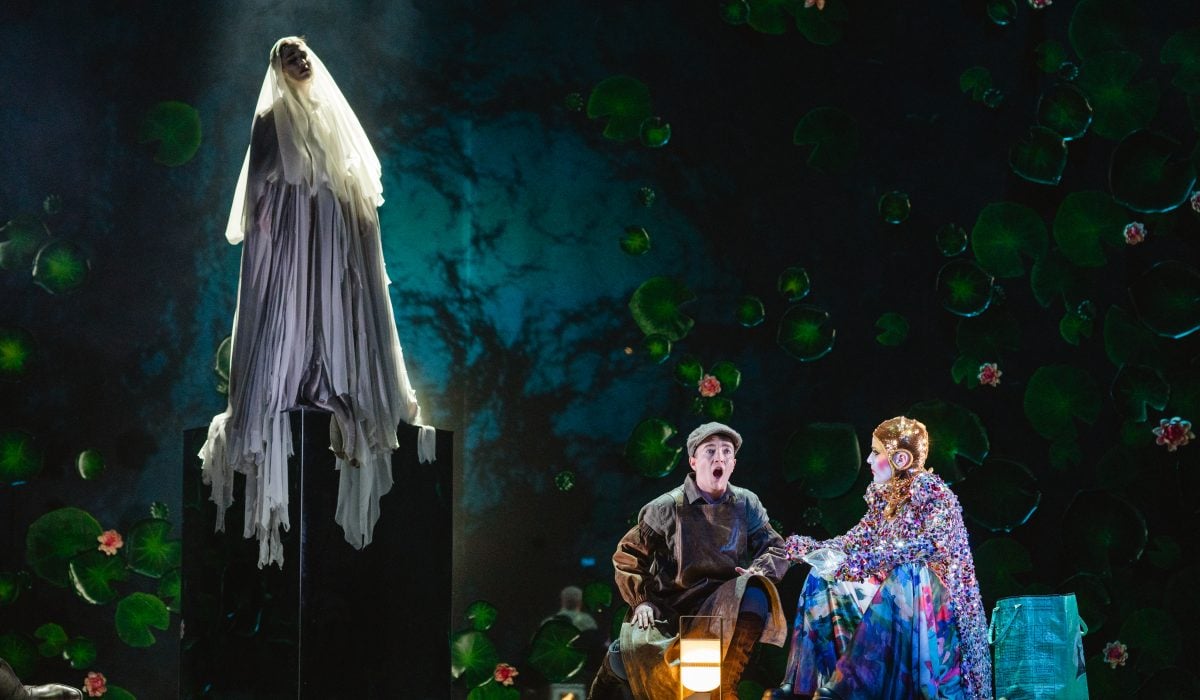
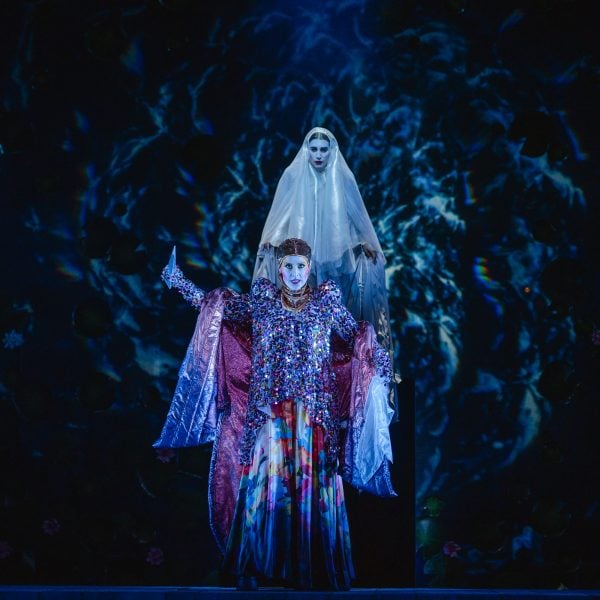
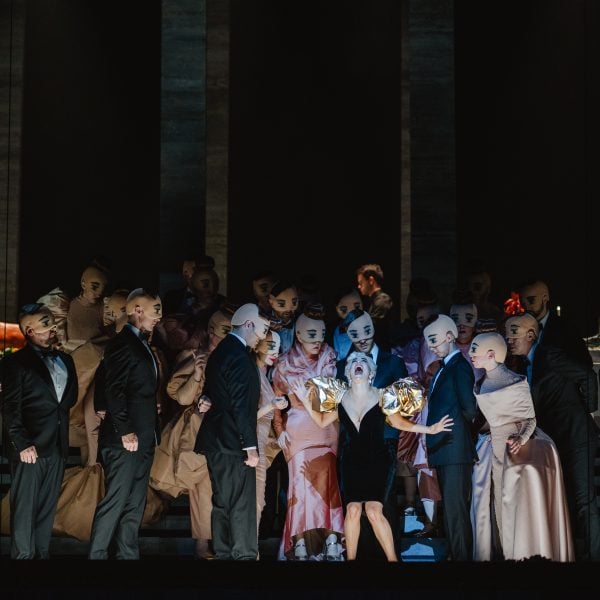
Sarah Giles’ production focuses on the human beings beneath the fairy tale veneer while leavening the tragedy with touches of genuine humour. Charles Davis mirrored underwater realm is a translucent pool topped by floating waterlilies. Renée Mulder’s costumes are stylish and chic, from the overloaded haute couture of the wedding guests to the eerie fantasy world of the dwellers in the lake. Video design includes images of swimmers and rippling waves.
A little history
Rusalka, Dvořák’s ninth opera, was composed between 1900 and 1901. The libretto, by Jaroslav Kvapil, is based on Czech fairy tales (in Slavic mythology, a rusalka is a water sprite that lures travellers to watery graves). The plot, however, contains additional elements that suggest Kvapil knew Hans Christian Andersen’s The Little Mermaid and Undine by the early 19th-century German writer Friedrich de la Motte Fouqué.
The premiere took place in Prague on 31 March 1901. An instant success, it was immediately taken up throughout the Czech-speaking lands. It was slower to catch on further afield, however. The Viennese premiere, performed in Czech, took place in 1910 but it wasn’t until 1935 that it was first given in German translation in Stuttgart.
The first UK staging was given by John Lewis Opera at the Peter Jones department store in London’s Sloane Square in 1950, while the US premiere had to wait until 1975 when it was performed by San Diego Opera (the Metropolitan Opera didn’t stage it until in 1993). Opera Australia’s first production was in 2007. Conducted by Richard Hickox, and with Cheryl Barker in the title role, it won the Helpmann Award for Best Opera.
Conversation starters
- ‘Song to the Moon’ has featured in around a dozen films, the most famous being Driving Miss Daisy where it plays while Jessica Tandy is working in her garden.
- The term rusalka is used to describe a malign Slavonic water spirit and derives from the Latin Rosalia, a name for the period of Pentecost. It is likely that an annual pre-Christian tradition resulted in that time of year being associated with spirits.
- Statistics suggest there are more performances of Rusalka each year by opera companies worldwide, than there are of all of Dvořák’s nine other operas combined.
Discover More
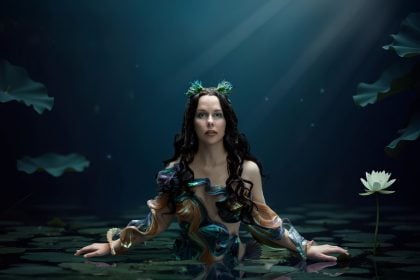
Rusalka
25 June - 4 July 2026
OPERA QUEENSLAND PRESENTS RUSALKA ★★★★★ “…the best in decades”. – Limelight ★★★★★ “Ambitiously conce...
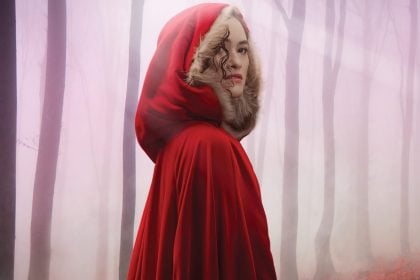
Into the Woods
11 - 21 November 2026: Brisbane | 3 & 4 December: Toowoomba
OPERA QUEENSLAND AND QUEENSLAND THEATRE COMPANY PRESENT INTO THE WOODS Brisbane tickets click here. Toowoomba tickets click here. Be careful what you ...
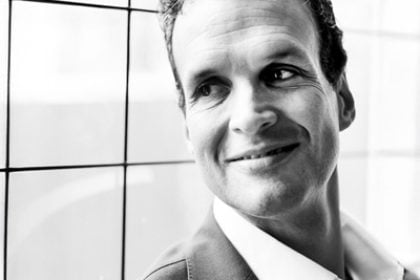
Carlos Bárcenas & John Woods: Alma Latina!
Thursday 16 - Saturday 18 July 2026
Alma Latina! explores the vibrant soul of Latin music, featuring the much-loved Colombian tenor Carlos Bárcenas in a performance that brings to lif...

Sing Sing Sing – July
Saturday 18 July 2026
Sip, sing and socialise with Opera Queensland’s next Sing Sing Sing, a fun-filled night of music making and merriment for singers of all levels of e...


